Tokenization

Network Tokenization Explained: Benefits for Enterprise Merchants
In the rapidly evolving landscape of digital commerce, securing customer payment data while maintaining a frictionless checkout experience is a top priority for enterprise merchants. Traditional tokenization provided by Payment Service Providers (PSPs) was a step in the right direction, but the industry is now shifting toward a more robust and standardized solution: network tokenization.
For merchants processing high volumes of transactions, understanding how this technology works and leveraging it independently is crucial for optimizing revenue and maintaining payment sovereignty.
What Is Network Tokenization?
Network tokenization is a security standard where the primary account number (PAN) of a credit or debit card is replaced with a unique digital identifier, or "token," generated directly by the card networks (such as Visa or Mastercard).
Unlike traditional PSP tokens, which are proprietary and only work within a specific payment processor's ecosystem, network tokens are universally recognized across the entire payment network. This fundamental difference unlocks significant advantages for high-volume enterprises.
Key Benefits of Network Tokenization
Implementing this technology directly impacts a merchant's bottom line. The primary benefits of network tokenization include:
Higher Authorization Rates: Because the tokens are generated by the card networks themselves, they are trusted inherently by issuing banks. This significantly reduces false declines and increases overall approval rates.
Automatic Account Updates: When a customer's physical card expires or is replaced, the underlying PAN is updated automatically by the card network. The network token remains the same, preventing interrupted subscriptions and saving merchants from chasing updated payment details.
Lower Interchange Fees: To encourage adoption, card networks often offer reduced interchange fees for transactions processed using network tokens compared to standard PAN-based transactions.
The Sovereignty Challenge: Owning Your Tokens
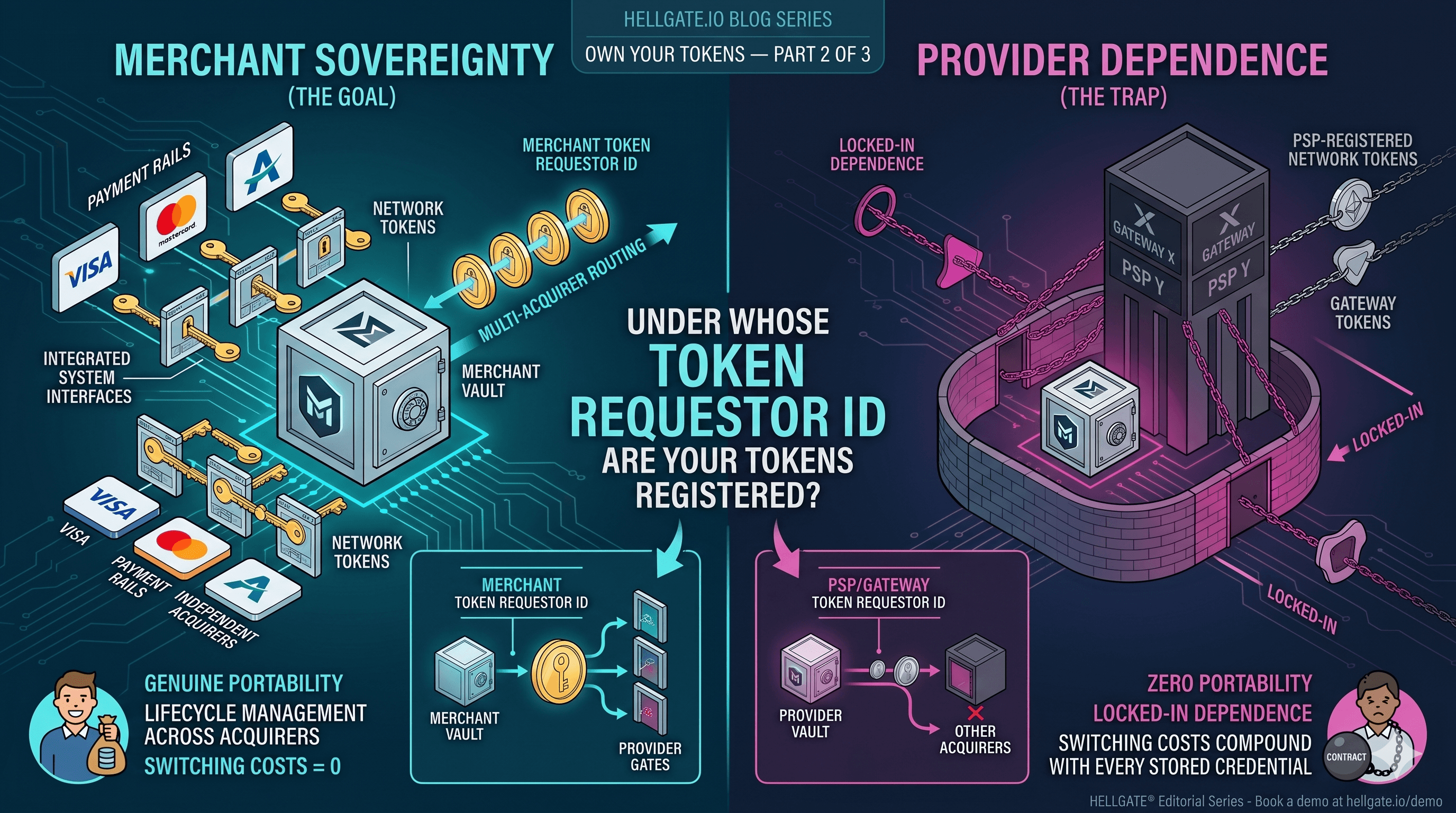
While the benefits of network tokenization are clear, how you implement it matters immensely. Many enterprise merchants make the mistake of allowing a single PSP to manage their network tokens.
This creates severe vendor lock-in. If you decide to switch processors or route specific transactions to a more cost-effective acquirer, you cannot easily take your tokens with you. To maintain true payment sovereignty, your tokens must be stored independently of your processor.
Securing Data with an Independent Credit Card Vault
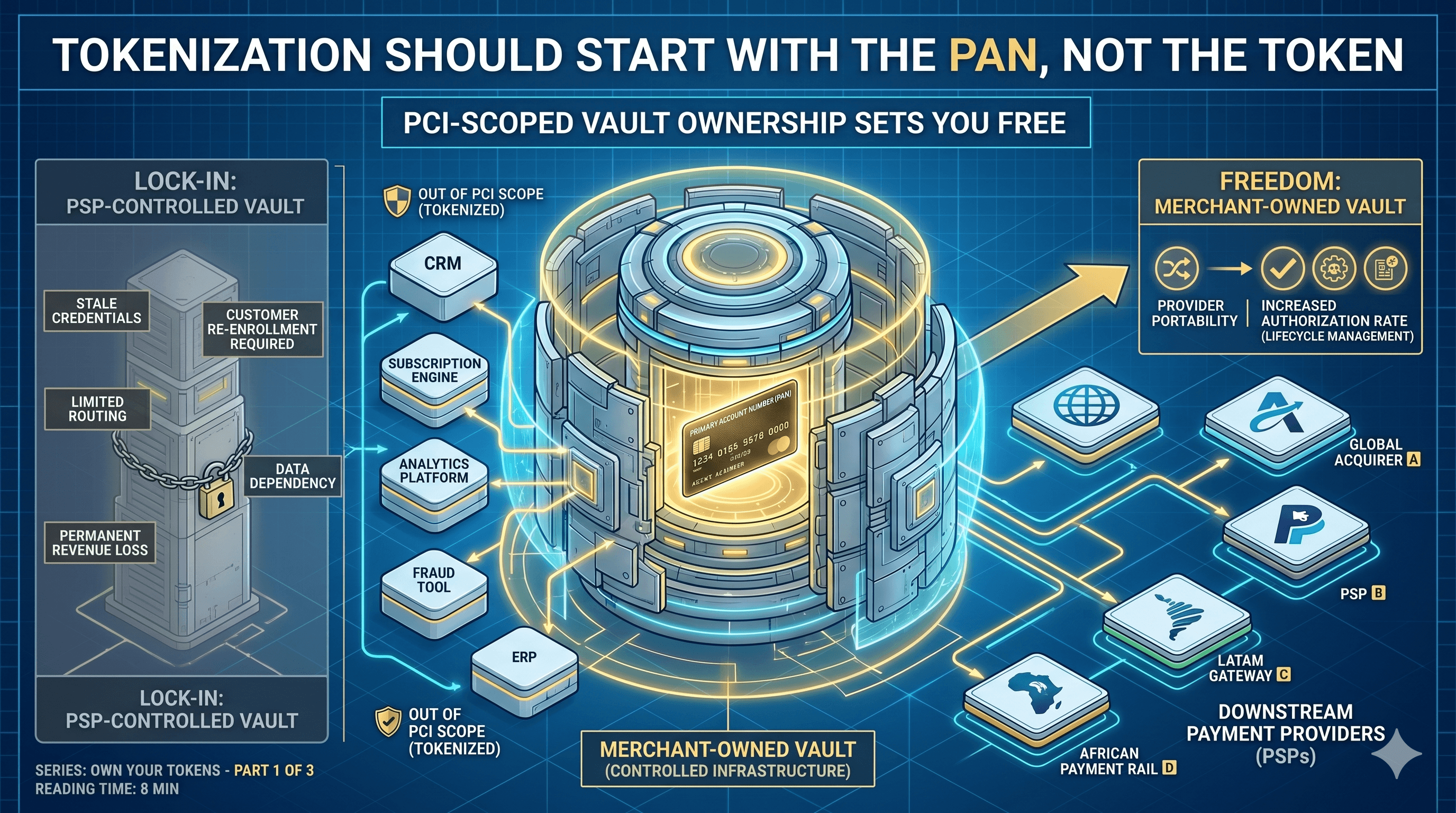
To fully capitalize on a Composable Payment Architecture (CPA), merchants should utilize an independent credit card vault. By doing so, you can securely store sensitive card data, generate network tokens independently, and significantly reduce your PCI-DSS compliance scope (such as achieving SAQ-A descoping).
With your tokens vaulted independently, you gain the freedom to utilize advanced payment orchestration, routing transactions to multiple acquirers based on performance, without ever compromising security or customer experience. Furthermore, this independent data foundation allows you to seamlessly feed clean data into your payment fraud prevention systems.
Take Control of Your Tokenization Strategy
Stop renting your payment data. Guardian is our enterprise-grade PCI vault and tokenization engine, designed to give you absolute ownership of your customer credentials.
Ready to implement independent tokenization? Explore Guardian today and discover how to increase your authorization rates while maintaining total payment sovereignty.
Moritz Bauch is the VP of Business Development at Starfish & Co., the creators of Hellgate®. He is responsible for expanding the company’s global ecosystem and driving commercial growth. Moritz works at the intersection of strategy and execution, helping enterprises and partners leverage Hellgate’s composable architecture to build scalable, future-proof payment models. His focus is on forging strong alliances that turn complex infrastructure into a competitive advantage.