Vaulting
Beyond the Walled Garden: Architecting a Sovereign Payment Stack
Feb 9, 2026


Beyond the Walled Garden: Architecting a Sovereign Payment Stack
For the last decade, the default strategy for enterprise payments was simple: "All-in-One." You picked a Payment Service Provider (PSP), integrated their SDK, and let them handle everything. It was convenient. It was fast.
But as modern enterprises scale, the "All-in-One" model has mutated into a "Walled Garden."
When your Primary Account Number (PAN) data is locked inside a proprietary vault, you lose leverage. You become a "price taker," accepting whatever fees and authorization rates your provider dictates. The modern alternative is Composable Payment Architecture-an infrastructure-first approach that prioritizes data sovereignty, PCI scope reduction, and revenue optimization.
Here is how to rebuild your stack for the next decade.
1. The Foundation: Sovereign Vaulting & Compliance
The core asset of any merchant is customer data. However, handling this data introduces massive liability under PCI-DSS (Payment Card Industry Data Security Standard).
The Trap of the "CDE"
If your internal servers touch, store, or transmit raw card data, they become part of the Cardholder Data Environment (CDE). This triggers the need for strict PCI compliance audits, often requiring a complex SAQ D (Self-Assessment Questionnaire) rather than the simpler SAQ A.
The Solution: Zero-Knowledge Architecture
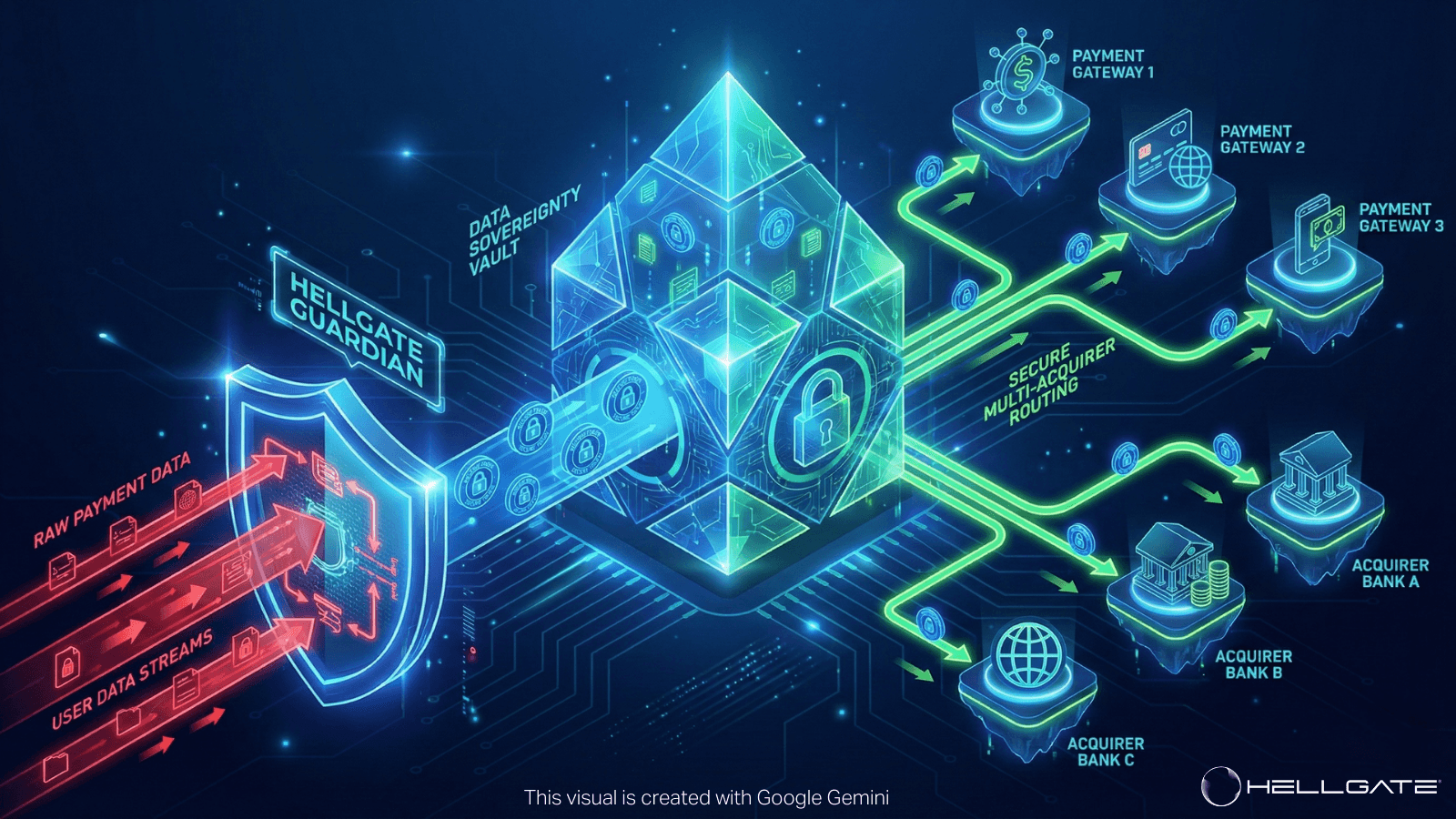
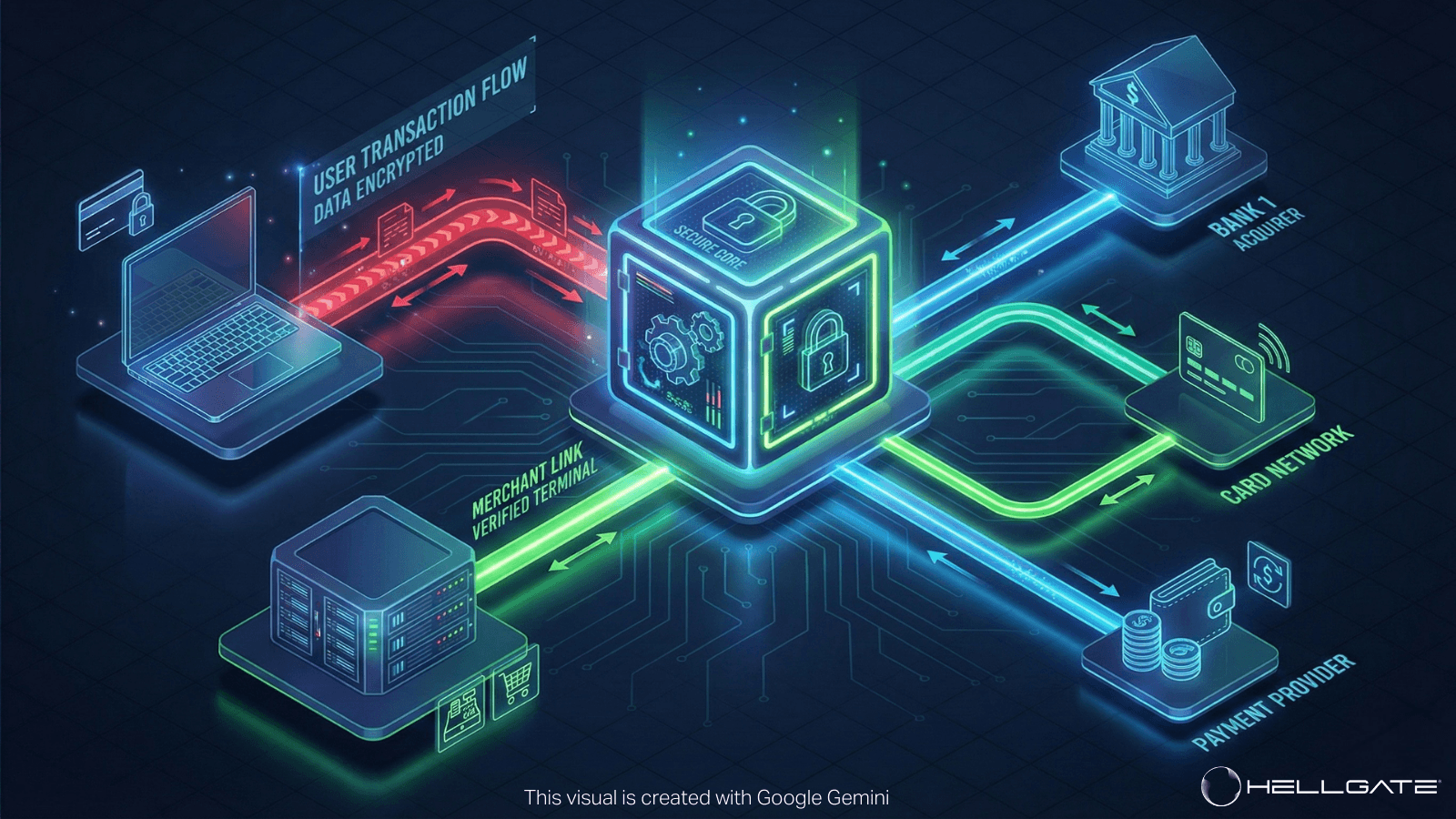
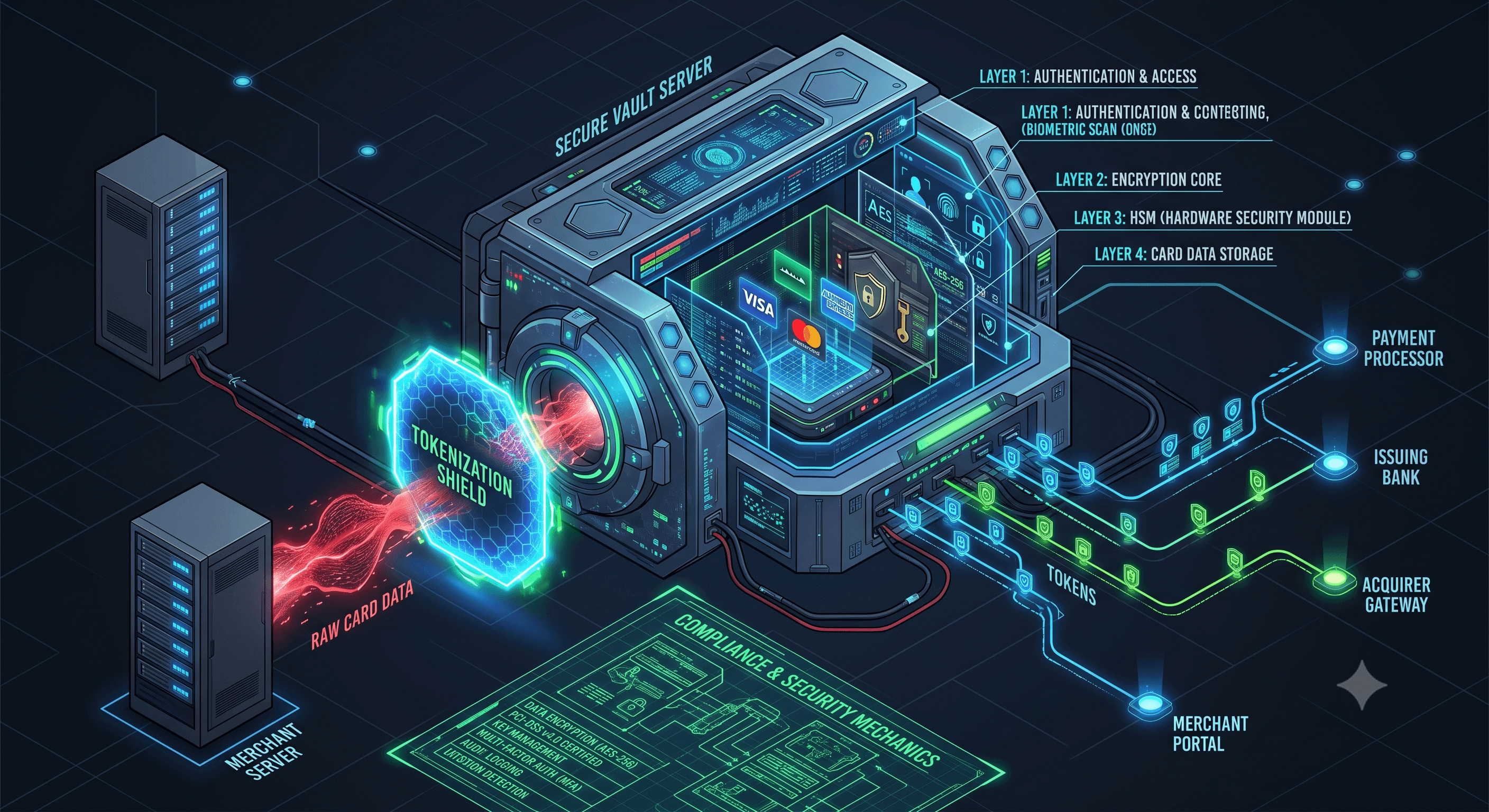
Hellgate Guardian acts as a sovereign Credit Card Vault. By using a Secure Storage API and client-side encryption, we capture data before it hits your servers.
PCI Vaulting: We store the sensitive data in a geo-redundant, isolated environment.
PCI Scope Reduction: Since your backend never touches the PAN, you drastically reduce your compliance burden and audit trail requirements.
Zero-Knowledge Architecture: We ensure that while you own the token, the raw liability remains segmented away from your core infrastructure.
2. Tokenization: Gateway vs. Multi-Acquirer
Not all tokens are created equal. When you rely on a standard Stripe Token or Adyen Token, you are using a "Gateway Token". These are reference IDs that only work within that specific provider's ecosystem. If you want to switch providers, you face the massive hurdle of migrating millions of records.
The Power of Detokenization
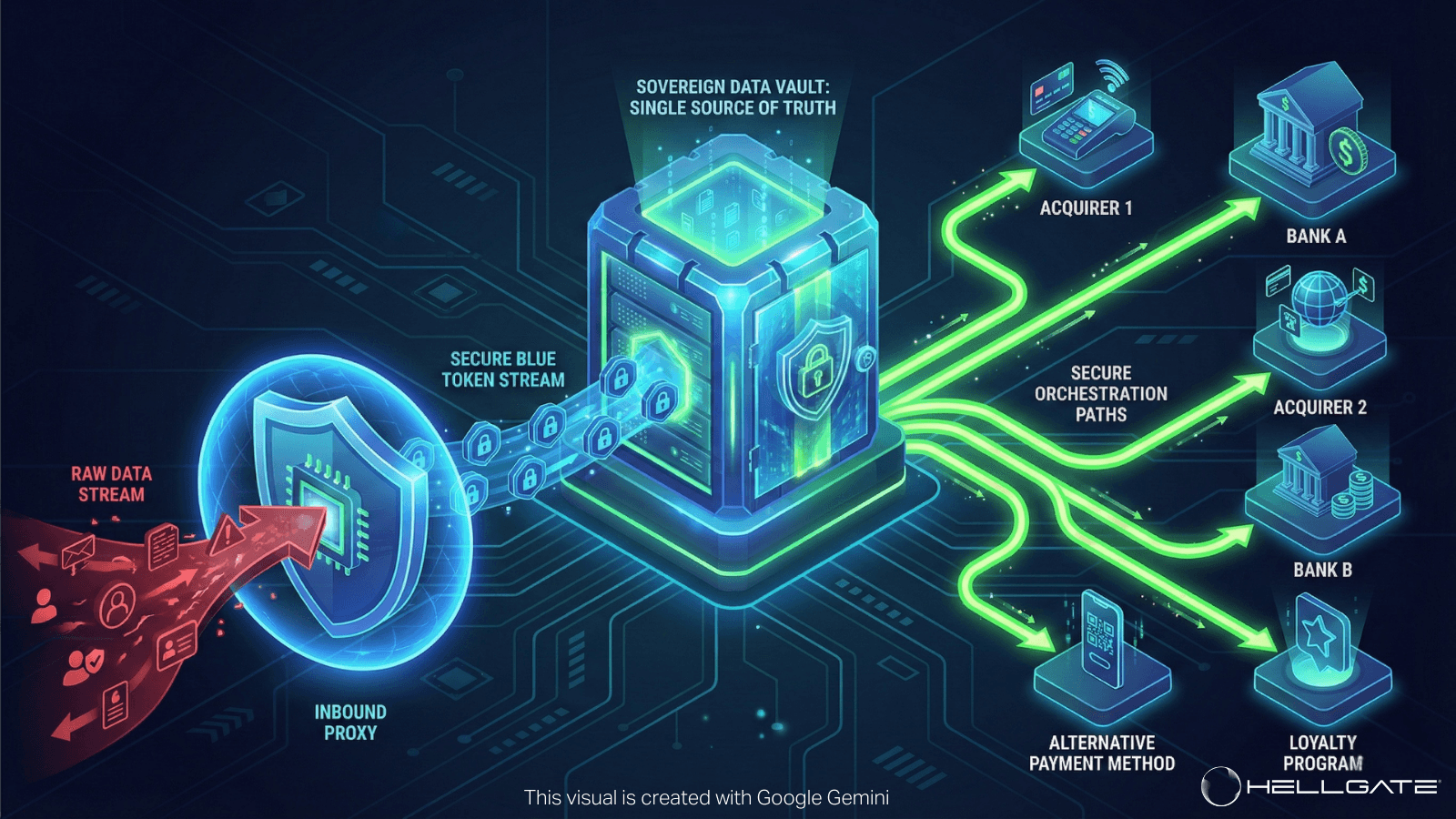
True independence requires Multi-Acquirer Tokenization. Guardian issues you a Universal Token. When you need to transact, our infrastructure handles the Detokenization process via a secure Proxy.
Ingest: Data enters the vault; you receive a Universal Token.
Route: You send the token to Guardian with routing instructions.
Inject: We detokenize the PAN and inject it directly into the API of any provider (Worldpay, Checkout, or a local bank).
This effectively decouples your Card Data Vault from your processor, granting you Data Portability and eliminating vendor lock-in.
3. Revenue Optimization: The Network Token Revolution
Once you control the vault, you move from "defense" (compliance) to "offense" (optimization). The biggest lever for modern merchants is Network Tokenization.
What are Network Tokens?
Unlike gateway tokens, Scheme Tokens (or Network Tokens) are issued directly by the card schemes (Visa, Mastercard). They replace the PAN with a unique token that includes a dynamic Cryptogram for each transaction.
Hellgate Guardian integrates directly with Visa Token Service (VTS) and Mastercard Digital Enablement Service (MDES) to manage this lifecycle for you.
The ROI of Network Tokens
Authorization Rate Optimization: Because schemes trust these tokens more than raw PANs, merchants often see a 2-4% uplift in approval rates.
Life-Cycle Management: Physical cards expire or get lost. Network tokens automatically update in the background. Features like Visa Account Updater (VAU) and Account Updater logic are handled natively, ensuring your recurring revenue isn't lost to "involuntary churn."
4. Resilience: High Availability & Vulnerability Management
Building this infrastructure in-house is often a "Buy vs. Build" mistake. Maintaining a PCI Level 1 vault requires rigorous Vulnerability Management and High Availability infrastructure.
By treating payments as Infrastructure-as-Code, Hellgate Guardian allows engineering teams to focus on product features rather than patching firewalls or managing Credential Management keys.
Conclusion
The future of payments belongs to those who own their data. By moving from a "Walled Garden" PSP model to a "Sovereign Vault" architecture, you gain the trifecta of modern payments:
Freedom: Route to any processor via Multi-Acquirer Tokenization.
Security: Reduce your PCI-DSS scope instantly.
Growth: Boost revenue with Network Token optimization.
Don't let your infrastructure define your strategy. Let your strategy define your infrastructure.
Ready to deploy your Sovereign Vault? Read the docs or contact our engineering team.
Beyond the Walled Garden: Architecting a Sovereign Payment Stack
For the last decade, the default strategy for enterprise payments was simple: "All-in-One." You picked a Payment Service Provider (PSP), integrated their SDK, and let them handle everything. It was convenient. It was fast.
But as modern enterprises scale, the "All-in-One" model has mutated into a "Walled Garden."
When your Primary Account Number (PAN) data is locked inside a proprietary vault, you lose leverage. You become a "price taker," accepting whatever fees and authorization rates your provider dictates. The modern alternative is Composable Payment Architecture-an infrastructure-first approach that prioritizes data sovereignty, PCI scope reduction, and revenue optimization.
Here is how to rebuild your stack for the next decade.
1. The Foundation: Sovereign Vaulting & Compliance
The core asset of any merchant is customer data. However, handling this data introduces massive liability under PCI-DSS (Payment Card Industry Data Security Standard).
The Trap of the "CDE"
If your internal servers touch, store, or transmit raw card data, they become part of the Cardholder Data Environment (CDE). This triggers the need for strict PCI compliance audits, often requiring a complex SAQ D (Self-Assessment Questionnaire) rather than the simpler SAQ A.
The Solution: Zero-Knowledge Architecture
Hellgate Guardian acts as a sovereign Credit Card Vault. By using a Secure Storage API and client-side encryption, we capture data before it hits your servers.
PCI Vaulting: We store the sensitive data in a geo-redundant, isolated environment.
PCI Scope Reduction: Since your backend never touches the PAN, you drastically reduce your compliance burden and audit trail requirements.
Zero-Knowledge Architecture: We ensure that while you own the token, the raw liability remains segmented away from your core infrastructure.
2. Tokenization: Gateway vs. Multi-Acquirer
Not all tokens are created equal. When you rely on a standard Stripe Token or Adyen Token, you are using a "Gateway Token". These are reference IDs that only work within that specific provider's ecosystem. If you want to switch providers, you face the massive hurdle of migrating millions of records.
The Power of Detokenization
True independence requires Multi-Acquirer Tokenization. Guardian issues you a Universal Token. When you need to transact, our infrastructure handles the Detokenization process via a secure Proxy.
Ingest: Data enters the vault; you receive a Universal Token.
Route: You send the token to Guardian with routing instructions.
Inject: We detokenize the PAN and inject it directly into the API of any provider (Worldpay, Checkout, or a local bank).
This effectively decouples your Card Data Vault from your processor, granting you Data Portability and eliminating vendor lock-in.
3. Revenue Optimization: The Network Token Revolution
Once you control the vault, you move from "defense" (compliance) to "offense" (optimization). The biggest lever for modern merchants is Network Tokenization.
What are Network Tokens?
Unlike gateway tokens, Scheme Tokens (or Network Tokens) are issued directly by the card schemes (Visa, Mastercard). They replace the PAN with a unique token that includes a dynamic Cryptogram for each transaction.
Hellgate Guardian integrates directly with Visa Token Service (VTS) and Mastercard Digital Enablement Service (MDES) to manage this lifecycle for you.
The ROI of Network Tokens
Authorization Rate Optimization: Because schemes trust these tokens more than raw PANs, merchants often see a 2-4% uplift in approval rates.
Life-Cycle Management: Physical cards expire or get lost. Network tokens automatically update in the background. Features like Visa Account Updater (VAU) and Account Updater logic are handled natively, ensuring your recurring revenue isn't lost to "involuntary churn."
4. Resilience: High Availability & Vulnerability Management
Building this infrastructure in-house is often a "Buy vs. Build" mistake. Maintaining a PCI Level 1 vault requires rigorous Vulnerability Management and High Availability infrastructure.
By treating payments as Infrastructure-as-Code, Hellgate Guardian allows engineering teams to focus on product features rather than patching firewalls or managing Credential Management keys.
Conclusion
The future of payments belongs to those who own their data. By moving from a "Walled Garden" PSP model to a "Sovereign Vault" architecture, you gain the trifecta of modern payments:
Freedom: Route to any processor via Multi-Acquirer Tokenization.
Security: Reduce your PCI-DSS scope instantly.
Growth: Boost revenue with Network Token optimization.
Don't let your infrastructure define your strategy. Let your strategy define your infrastructure.
Ready to deploy your Sovereign Vault? Read the docs or contact our engineering team.
Beyond the Walled Garden: Architecting a Sovereign Payment Stack
For the last decade, the default strategy for enterprise payments was simple: "All-in-One." You picked a Payment Service Provider (PSP), integrated their SDK, and let them handle everything. It was convenient. It was fast.
But as modern enterprises scale, the "All-in-One" model has mutated into a "Walled Garden."
When your Primary Account Number (PAN) data is locked inside a proprietary vault, you lose leverage. You become a "price taker," accepting whatever fees and authorization rates your provider dictates. The modern alternative is Composable Payment Architecture-an infrastructure-first approach that prioritizes data sovereignty, PCI scope reduction, and revenue optimization.
Here is how to rebuild your stack for the next decade.
1. The Foundation: Sovereign Vaulting & Compliance
The core asset of any merchant is customer data. However, handling this data introduces massive liability under PCI-DSS (Payment Card Industry Data Security Standard).
The Trap of the "CDE"
If your internal servers touch, store, or transmit raw card data, they become part of the Cardholder Data Environment (CDE). This triggers the need for strict PCI compliance audits, often requiring a complex SAQ D (Self-Assessment Questionnaire) rather than the simpler SAQ A.
The Solution: Zero-Knowledge Architecture
Hellgate Guardian acts as a sovereign Credit Card Vault. By using a Secure Storage API and client-side encryption, we capture data before it hits your servers.
PCI Vaulting: We store the sensitive data in a geo-redundant, isolated environment.
PCI Scope Reduction: Since your backend never touches the PAN, you drastically reduce your compliance burden and audit trail requirements.
Zero-Knowledge Architecture: We ensure that while you own the token, the raw liability remains segmented away from your core infrastructure.
2. Tokenization: Gateway vs. Multi-Acquirer
Not all tokens are created equal. When you rely on a standard Stripe Token or Adyen Token, you are using a "Gateway Token". These are reference IDs that only work within that specific provider's ecosystem. If you want to switch providers, you face the massive hurdle of migrating millions of records.
The Power of Detokenization
True independence requires Multi-Acquirer Tokenization. Guardian issues you a Universal Token. When you need to transact, our infrastructure handles the Detokenization process via a secure Proxy.
Ingest: Data enters the vault; you receive a Universal Token.
Route: You send the token to Guardian with routing instructions.
Inject: We detokenize the PAN and inject it directly into the API of any provider (Worldpay, Checkout, or a local bank).
This effectively decouples your Card Data Vault from your processor, granting you Data Portability and eliminating vendor lock-in.
3. Revenue Optimization: The Network Token Revolution
Once you control the vault, you move from "defense" (compliance) to "offense" (optimization). The biggest lever for modern merchants is Network Tokenization.
What are Network Tokens?
Unlike gateway tokens, Scheme Tokens (or Network Tokens) are issued directly by the card schemes (Visa, Mastercard). They replace the PAN with a unique token that includes a dynamic Cryptogram for each transaction.
Hellgate Guardian integrates directly with Visa Token Service (VTS) and Mastercard Digital Enablement Service (MDES) to manage this lifecycle for you.
The ROI of Network Tokens
Authorization Rate Optimization: Because schemes trust these tokens more than raw PANs, merchants often see a 2-4% uplift in approval rates.
Life-Cycle Management: Physical cards expire or get lost. Network tokens automatically update in the background. Features like Visa Account Updater (VAU) and Account Updater logic are handled natively, ensuring your recurring revenue isn't lost to "involuntary churn."
4. Resilience: High Availability & Vulnerability Management
Building this infrastructure in-house is often a "Buy vs. Build" mistake. Maintaining a PCI Level 1 vault requires rigorous Vulnerability Management and High Availability infrastructure.
By treating payments as Infrastructure-as-Code, Hellgate Guardian allows engineering teams to focus on product features rather than patching firewalls or managing Credential Management keys.
Conclusion
The future of payments belongs to those who own their data. By moving from a "Walled Garden" PSP model to a "Sovereign Vault" architecture, you gain the trifecta of modern payments:
Freedom: Route to any processor via Multi-Acquirer Tokenization.
Security: Reduce your PCI-DSS scope instantly.
Growth: Boost revenue with Network Token optimization.
Don't let your infrastructure define your strategy. Let your strategy define your infrastructure.
Ready to deploy your Sovereign Vault? Read the docs or contact our engineering team.
Co-Founder & Chief of Revenue and growth at Starfish & Co. – creators of Hellgate®
Jens Kohnen was driven to co-start the company by the conviction that payment infrastructure should empower businesses, not bind them. Recognizing that many large organizations were locked into monolithic, opaque setups, Jens embarked on a journey to free enterprises from these rigid stacks. His mission is to enable companies to regain full ownership and monetize their flows, transforming payments from a cost center into a strategic lever for growth.
Vaulting
Jan 15, 2026
Tokenization as a Service: The Infrastructure-First Approach to Data Security

Vaulting
Jan 15, 2026
Tokenization as a Service: The Infrastructure-First Approach to Data Security

Vaulting
Jan 15, 2026
Tokenization as a Service: The Infrastructure-First Approach to Data Security

Vaulting
Jan 9, 2026
Beyond the PSP: Choosing the Right Payment Tokenization Service Provider

Vaulting
Jan 9, 2026
Beyond the PSP: Choosing the Right Payment Tokenization Service Provider

Vaulting
Jan 9, 2026
Beyond the PSP: Choosing the Right Payment Tokenization Service Provider

Vaulting
Jan 5, 2026
Network Tokens vs PCI Tokens: The Complete Enterprise Decision Framework

Vaulting
Jan 5, 2026
Network Tokens vs PCI Tokens: The Complete Enterprise Decision Framework

Vaulting
Jan 5, 2026
Network Tokens vs PCI Tokens: The Complete Enterprise Decision Framework
See Hellgate CPA in action
Let our product specialists guide you through the platform, touch upon all functionalities relevant for your individual use case and answer all your questions directly.
See Hellgate CPA in action
Let our product specialists guide you through the platform, touch upon all functionalities relevant for your individual use case and answer all your questions directly.
See Hellgate CPA in action
Let our product specialists guide you through the platform, touch upon all functionalities relevant for your individual use case and answer all your questions directly.