
Vaulting
Tokenization as a Service: The Infrastructure-First Approach to Data Security
Jan 15, 2026


Tokenization as a Service: The Infrastructure-First Approach to Data Security
When your business handles payment card data, you're essentially sitting on a compliance time bomb. Every stored card number represents potential liability, audit complexity, and sleepless nights wondering if your security measures are enough. But what if you could make this problem disappear entirely while actually gaining more control over your payment infrastructure?
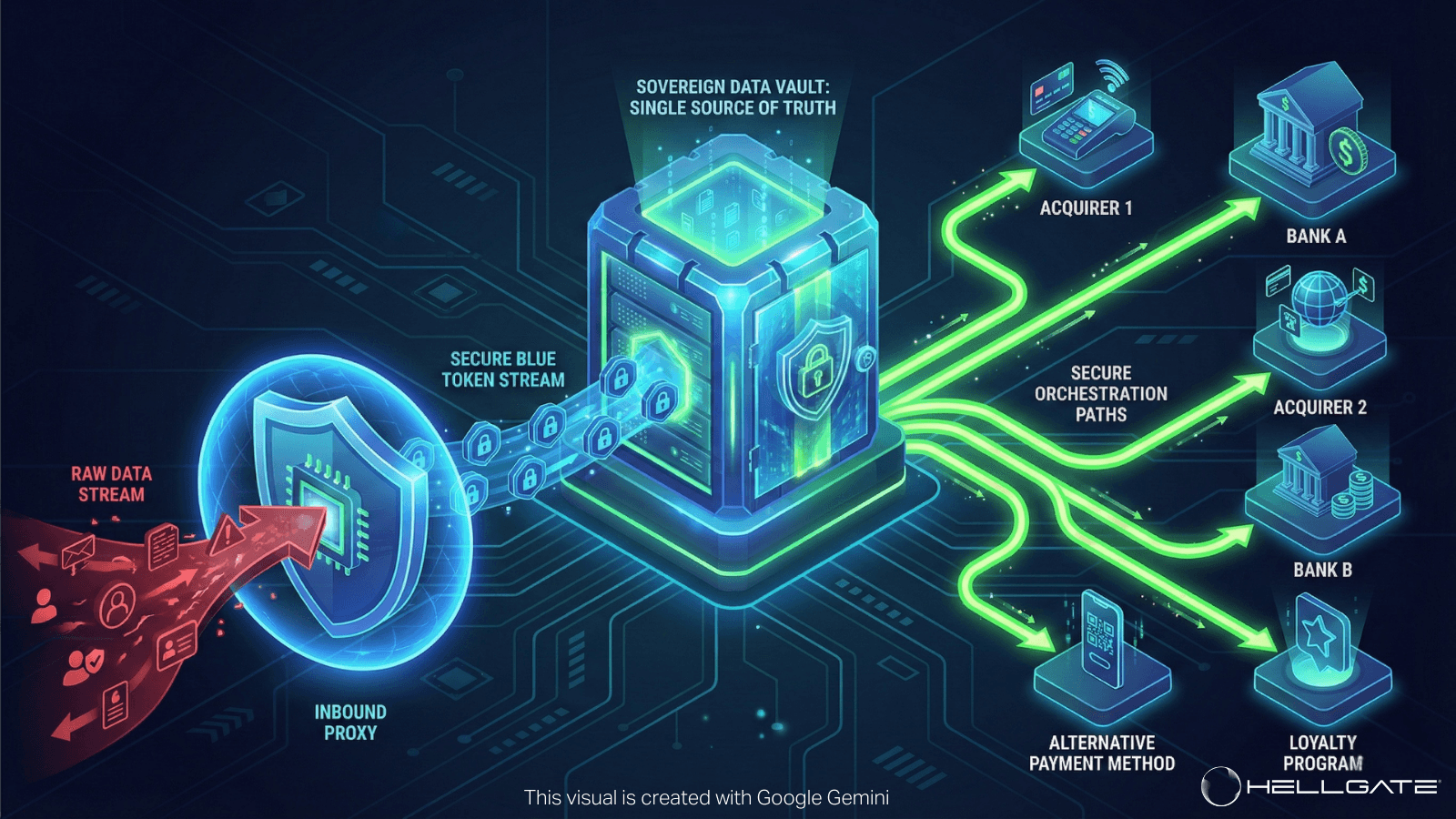
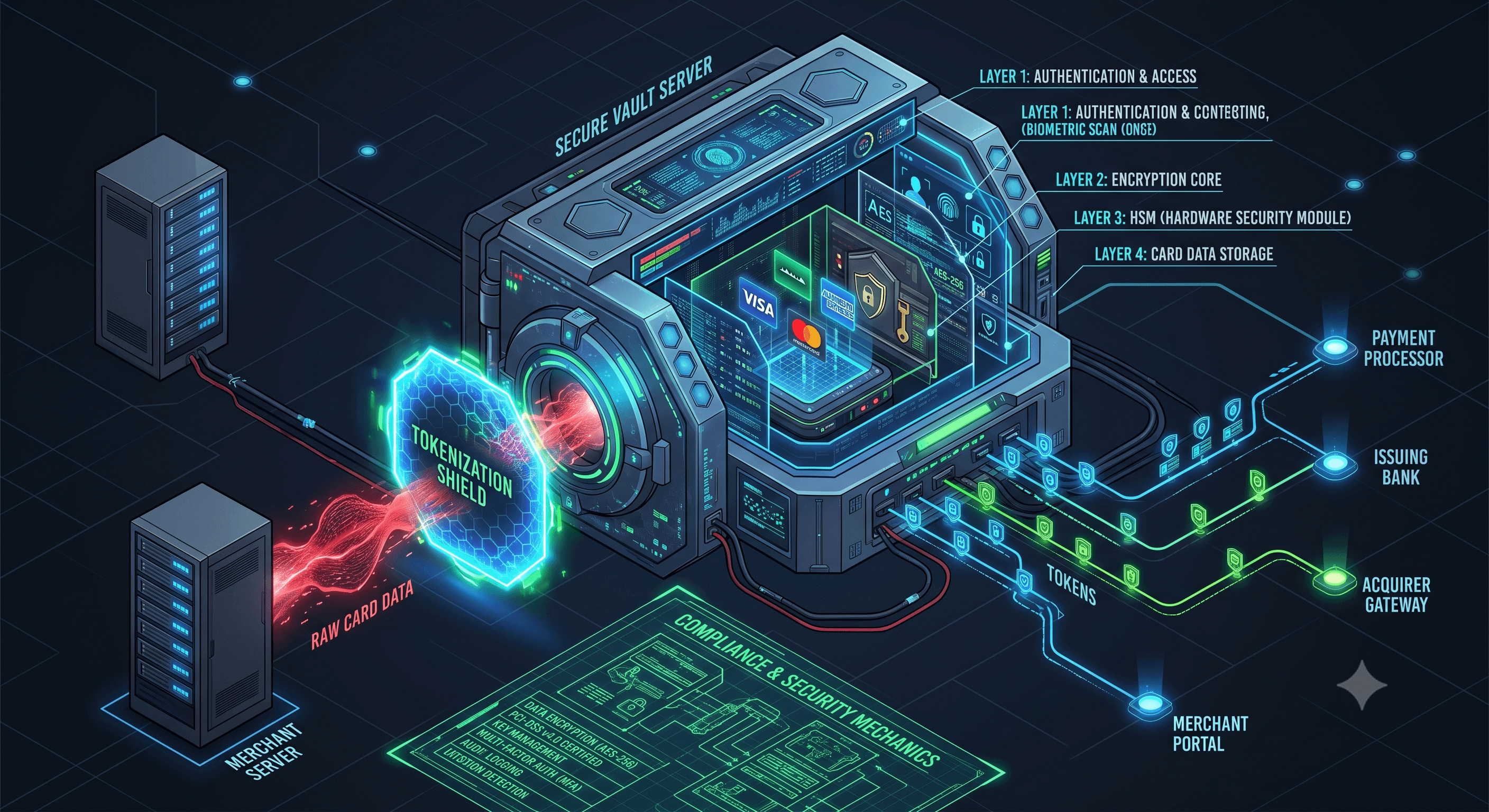
That's where Tokenization as a Service (TaaS) comes in. Think of it as a specialized cloud service that captures, stores, and replaces sensitive payment data with non-sensitive tokens through a simple API integration. Instead of wrestling with PCI DSS requirements or building complex vaulting systems, you outsource this critical function to experts who live and breathe data security.
The traditional approach of storing card data internally isn't just risky-it's increasingly impractical for modern businesses. Between evolving compliance requirements, sophisticated cyber threats, and the need for payment flexibility, building your own secure storage infrastructure is like trying to compete with AWS by running your own data center. The smarter play? Let a dedicated service layer handle the complexity while you focus on what makes your business unique.
Why "As a Service"? The Operational Benefits
The beauty of treating tokenization as a service lies in its immediate operational impact. When you integrate with a TaaS provider like Hellgate, you're not just getting a vault-you're inheriting an entire compliance infrastructure.
Instant PCI DSS Compliance becomes your new reality. Instead of preparing for lengthy audits and maintaining extensive documentation, your PCI scope shrinks dramatically. The service provider handles the heavy lifting of compliance audits and certifications. Your responsibility? Simply consume their API securely. It's the difference between maintaining a nuclear reactor and plugging into the power grid.
Scalability happens automatically. Black Friday traffic spike? International expansion? A TaaS platform built for enterprise scale handles volume fluctuations without you provisioning a single server. These platforms are architected to process millions of tokenization requests globally, maintaining sub-second response times even under peak loads.
Speed to Market transforms from months to days. Rather than assembling a team of security experts and spending quarters building compliant infrastructure, developers can integrate a secure vault API in less than a week. That's time you can spend on features that actually differentiate your business.
Consider a marketplace we recently worked with. They estimated six months and $2 million to build internal tokenization infrastructure that would pass PCI audits. Instead, they integrated Hellgate Guardian in two weeks and redirected those resources toward improving their seller onboarding experience. The result? They launched three months earlier and saw 40% higher seller adoption rates.
TaaS vs. PSP Tokenization: The Freedom Factor
Here's where things get interesting-and where many businesses unknowingly paint themselves into a corner. Not all tokenization is created equal, and understanding the difference could save you from expensive vendor lock-in down the road.
PSP Tokenization seems convenient at first. Your payment service provider offers to handle tokenization alongside processing. One vendor, one integration, problem solved, right? Not quite. When you use a standard PSP like Stripe or Adyen for tokenization, those tokens only work within their ecosystem. It's like buying a phone that only makes calls to other phones from the same manufacturer. Sure, it works, but what happens when you need flexibility?
Independent TaaS takes a fundamentally different approach. A standalone service creates what we call a "Universal Token"-a secure reference that works across multiple payment providers and services. This isn't just a technical nicety; it's a strategic advantage.
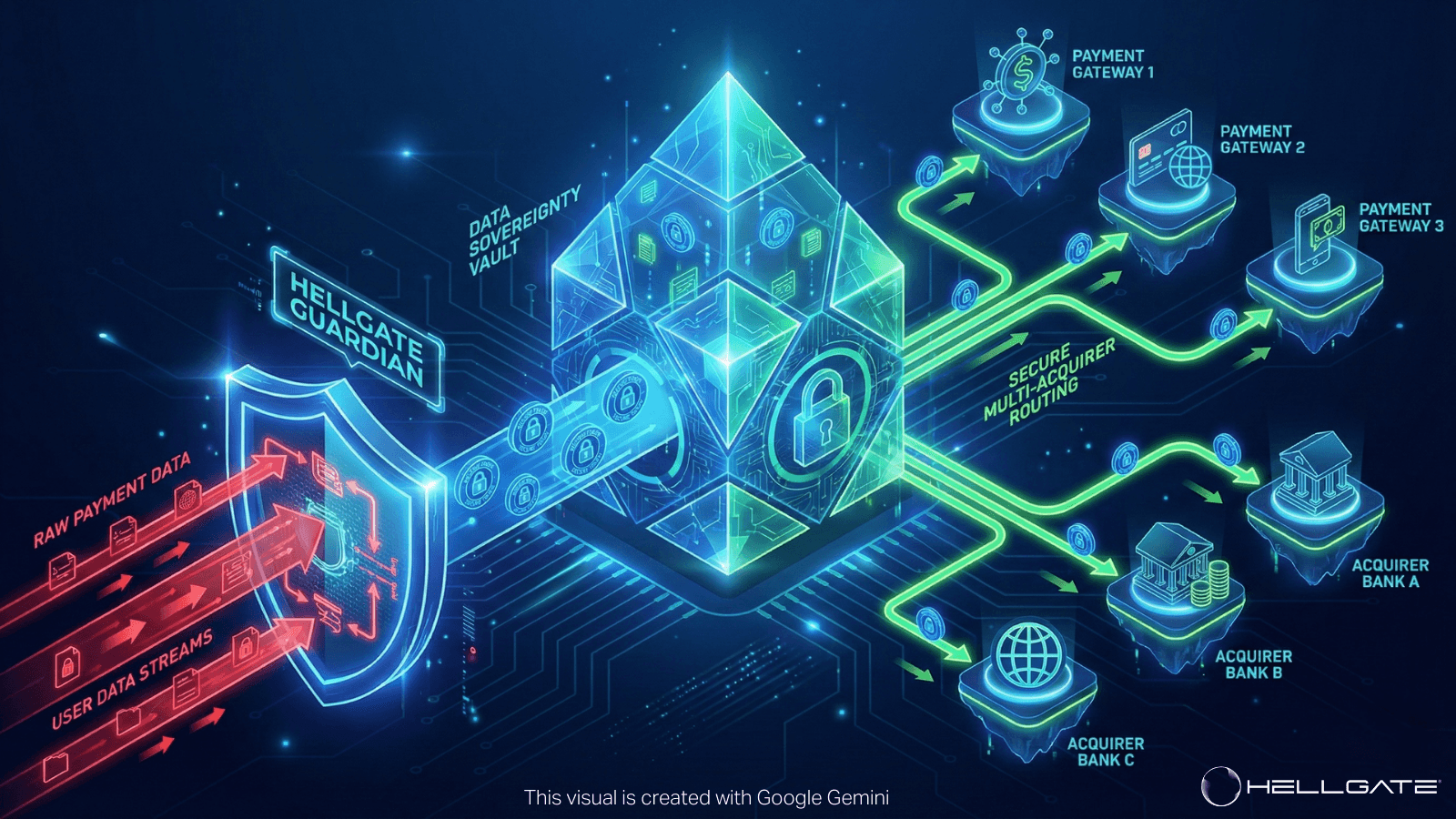
The portability factor alone changes the game. Tokens generated by Hellgate Guardian can be passed to any acquirer, fraud provider, or payment processor you choose. Need to route transactions through a local acquirer for better rates in Brazil? No problem. Want to A/B test fraud providers? Your tokens work everywhere.
This flexibility translates directly to negotiation power. When you own your tokenized data through an independent service, switching processors becomes a configuration change, not a migration project. We've seen enterprises reduce processing costs by 15-20% simply because they could credibly threaten to switch providers. Try doing that when your tokens are locked in a PSP's vault.
Deep Dive: Hellgate Guardian
Guardian represents our vision of what enterprise tokenization should be-secure, flexible, and composable. As Hellgate's dedicated TaaS module, it's built from the ground up to solve real enterprise payment challenges.
The core capability revolves around isolating sensitive data completely from your infrastructure. PANs never touch your servers, logs, or databases. But Guardian goes beyond basic vaulting with several key innovations:
Network Tokenization Support integrates seamlessly, allowing you to leverage scheme tokens from Visa and Mastercard for improved authorization rates. In practice, this can mean 3-5% higher approval rates for card-on-file transactions-a massive impact for subscription businesses or marketplaces.
Seamless Integration with Hellgate's broader composable payment architecture means tokenization becomes part of a larger strategy. Tokens created in Guardian flow naturally into our orchestration layer, enabling intelligent routing, automatic retries with different processors, and sophisticated fraud scoring-all without exposing sensitive data.
The architecture supports both synchronous and asynchronous tokenization flows, accommodating everything from real-time checkout experiences to bulk migration of existing card data. Multi-region deployment ensures data residency compliance while maintaining global accessibility.
Strategic Use Cases for TaaS
The real power of Tokenization as a Service emerges when you consider specific business scenarios:
Subscription Billing becomes infinitely more flexible. Instead of being tied to a single processor's recurring billing engine, you can route subscription charges through multiple processors based on geography, card type, or even time of day. One SaaS company we work with reduced involuntary churn by 12% simply by retrying failed subscription payments through alternative processors-something impossible with PSP-locked tokens.
One-Click Checkout experiences can be implemented without the compliance headaches. Tokens stored in Guardian enable instant payments across all your sales channels while keeping sensitive data completely isolated from your e-commerce platform, mobile apps, and point-of-sale systems.
Multi-Vendor Strategies become practical rather than theoretical. Use Guardian as your central token hub, feeding secure payment data to different fraud tools, payment gateways, and analytics platforms simultaneously. One retail client uses three different fraud providers depending on transaction characteristics, seamlessly switching between them using the same tokenized data.
A particularly compelling example comes from an automotive parts marketplace. They needed to support multiple payment methods across 15 countries while maintaining relationships with local acquirers for optimal pricing. By centralizing tokenization through Guardian, they manage a complex multi-acquirer strategy that would be impossible with traditional PSP tokenization. The result? 30% lower processing costs and 99.95% uptime through intelligent failover routing.
The Path Forward
Tokenization as a Service isn't just about security compliance-though it certainly solves that problem elegantly. It's about building a payment infrastructure that adapts to your business needs rather than constraining them. When you separate tokenization from processing, you gain the flexibility to optimize every aspect of your payment stack independently.
The enterprises winning in today's market are those that treat payment infrastructure as a strategic asset rather than a necessary evil. They understand that owning their payment data-even in tokenized form-provides leverage, flexibility, and ultimately, better customer experiences.
As payment complexity continues to grow with new regulations, payment methods, and global expansion, the question isn't whether to implement tokenization-it's whether to build it yourself or leverage a service that's already solved these challenges at scale.
Don't let compliance slow you down or vendor lock-in limit your options. De-risk your payments and own your payment stack with Hellgate Guardian. The future of payments is composable, and it starts with taking control of your data.
Ready to explore how Tokenization as a Service can transform your payment infrastructure? Let's discuss your specific challenges and map out a path to payment flexibility that actually makes sense for your business.
Tokenization as a Service: The Infrastructure-First Approach to Data Security
When your business handles payment card data, you're essentially sitting on a compliance time bomb. Every stored card number represents potential liability, audit complexity, and sleepless nights wondering if your security measures are enough. But what if you could make this problem disappear entirely while actually gaining more control over your payment infrastructure?
That's where Tokenization as a Service (TaaS) comes in. Think of it as a specialized cloud service that captures, stores, and replaces sensitive payment data with non-sensitive tokens through a simple API integration. Instead of wrestling with PCI DSS requirements or building complex vaulting systems, you outsource this critical function to experts who live and breathe data security.
The traditional approach of storing card data internally isn't just risky-it's increasingly impractical for modern businesses. Between evolving compliance requirements, sophisticated cyber threats, and the need for payment flexibility, building your own secure storage infrastructure is like trying to compete with AWS by running your own data center. The smarter play? Let a dedicated service layer handle the complexity while you focus on what makes your business unique.
Why "As a Service"? The Operational Benefits
The beauty of treating tokenization as a service lies in its immediate operational impact. When you integrate with a TaaS provider like Hellgate, you're not just getting a vault-you're inheriting an entire compliance infrastructure.
Instant PCI DSS Compliance becomes your new reality. Instead of preparing for lengthy audits and maintaining extensive documentation, your PCI scope shrinks dramatically. The service provider handles the heavy lifting of compliance audits and certifications. Your responsibility? Simply consume their API securely. It's the difference between maintaining a nuclear reactor and plugging into the power grid.
Scalability happens automatically. Black Friday traffic spike? International expansion? A TaaS platform built for enterprise scale handles volume fluctuations without you provisioning a single server. These platforms are architected to process millions of tokenization requests globally, maintaining sub-second response times even under peak loads.
Speed to Market transforms from months to days. Rather than assembling a team of security experts and spending quarters building compliant infrastructure, developers can integrate a secure vault API in less than a week. That's time you can spend on features that actually differentiate your business.
Consider a marketplace we recently worked with. They estimated six months and $2 million to build internal tokenization infrastructure that would pass PCI audits. Instead, they integrated Hellgate Guardian in two weeks and redirected those resources toward improving their seller onboarding experience. The result? They launched three months earlier and saw 40% higher seller adoption rates.
TaaS vs. PSP Tokenization: The Freedom Factor
Here's where things get interesting-and where many businesses unknowingly paint themselves into a corner. Not all tokenization is created equal, and understanding the difference could save you from expensive vendor lock-in down the road.
PSP Tokenization seems convenient at first. Your payment service provider offers to handle tokenization alongside processing. One vendor, one integration, problem solved, right? Not quite. When you use a standard PSP like Stripe or Adyen for tokenization, those tokens only work within their ecosystem. It's like buying a phone that only makes calls to other phones from the same manufacturer. Sure, it works, but what happens when you need flexibility?
Independent TaaS takes a fundamentally different approach. A standalone service creates what we call a "Universal Token"-a secure reference that works across multiple payment providers and services. This isn't just a technical nicety; it's a strategic advantage.
The portability factor alone changes the game. Tokens generated by Hellgate Guardian can be passed to any acquirer, fraud provider, or payment processor you choose. Need to route transactions through a local acquirer for better rates in Brazil? No problem. Want to A/B test fraud providers? Your tokens work everywhere.
This flexibility translates directly to negotiation power. When you own your tokenized data through an independent service, switching processors becomes a configuration change, not a migration project. We've seen enterprises reduce processing costs by 15-20% simply because they could credibly threaten to switch providers. Try doing that when your tokens are locked in a PSP's vault.
Deep Dive: Hellgate Guardian
Guardian represents our vision of what enterprise tokenization should be-secure, flexible, and composable. As Hellgate's dedicated TaaS module, it's built from the ground up to solve real enterprise payment challenges.
The core capability revolves around isolating sensitive data completely from your infrastructure. PANs never touch your servers, logs, or databases. But Guardian goes beyond basic vaulting with several key innovations:
Network Tokenization Support integrates seamlessly, allowing you to leverage scheme tokens from Visa and Mastercard for improved authorization rates. In practice, this can mean 3-5% higher approval rates for card-on-file transactions-a massive impact for subscription businesses or marketplaces.
Seamless Integration with Hellgate's broader composable payment architecture means tokenization becomes part of a larger strategy. Tokens created in Guardian flow naturally into our orchestration layer, enabling intelligent routing, automatic retries with different processors, and sophisticated fraud scoring-all without exposing sensitive data.
The architecture supports both synchronous and asynchronous tokenization flows, accommodating everything from real-time checkout experiences to bulk migration of existing card data. Multi-region deployment ensures data residency compliance while maintaining global accessibility.
Strategic Use Cases for TaaS
The real power of Tokenization as a Service emerges when you consider specific business scenarios:
Subscription Billing becomes infinitely more flexible. Instead of being tied to a single processor's recurring billing engine, you can route subscription charges through multiple processors based on geography, card type, or even time of day. One SaaS company we work with reduced involuntary churn by 12% simply by retrying failed subscription payments through alternative processors-something impossible with PSP-locked tokens.
One-Click Checkout experiences can be implemented without the compliance headaches. Tokens stored in Guardian enable instant payments across all your sales channels while keeping sensitive data completely isolated from your e-commerce platform, mobile apps, and point-of-sale systems.
Multi-Vendor Strategies become practical rather than theoretical. Use Guardian as your central token hub, feeding secure payment data to different fraud tools, payment gateways, and analytics platforms simultaneously. One retail client uses three different fraud providers depending on transaction characteristics, seamlessly switching between them using the same tokenized data.
A particularly compelling example comes from an automotive parts marketplace. They needed to support multiple payment methods across 15 countries while maintaining relationships with local acquirers for optimal pricing. By centralizing tokenization through Guardian, they manage a complex multi-acquirer strategy that would be impossible with traditional PSP tokenization. The result? 30% lower processing costs and 99.95% uptime through intelligent failover routing.
The Path Forward
Tokenization as a Service isn't just about security compliance-though it certainly solves that problem elegantly. It's about building a payment infrastructure that adapts to your business needs rather than constraining them. When you separate tokenization from processing, you gain the flexibility to optimize every aspect of your payment stack independently.
The enterprises winning in today's market are those that treat payment infrastructure as a strategic asset rather than a necessary evil. They understand that owning their payment data-even in tokenized form-provides leverage, flexibility, and ultimately, better customer experiences.
As payment complexity continues to grow with new regulations, payment methods, and global expansion, the question isn't whether to implement tokenization-it's whether to build it yourself or leverage a service that's already solved these challenges at scale.
Don't let compliance slow you down or vendor lock-in limit your options. De-risk your payments and own your payment stack with Hellgate Guardian. The future of payments is composable, and it starts with taking control of your data.
Ready to explore how Tokenization as a Service can transform your payment infrastructure? Let's discuss your specific challenges and map out a path to payment flexibility that actually makes sense for your business.
Tokenization as a Service: The Infrastructure-First Approach to Data Security
When your business handles payment card data, you're essentially sitting on a compliance time bomb. Every stored card number represents potential liability, audit complexity, and sleepless nights wondering if your security measures are enough. But what if you could make this problem disappear entirely while actually gaining more control over your payment infrastructure?
That's where Tokenization as a Service (TaaS) comes in. Think of it as a specialized cloud service that captures, stores, and replaces sensitive payment data with non-sensitive tokens through a simple API integration. Instead of wrestling with PCI DSS requirements or building complex vaulting systems, you outsource this critical function to experts who live and breathe data security.
The traditional approach of storing card data internally isn't just risky-it's increasingly impractical for modern businesses. Between evolving compliance requirements, sophisticated cyber threats, and the need for payment flexibility, building your own secure storage infrastructure is like trying to compete with AWS by running your own data center. The smarter play? Let a dedicated service layer handle the complexity while you focus on what makes your business unique.
Why "As a Service"? The Operational Benefits
The beauty of treating tokenization as a service lies in its immediate operational impact. When you integrate with a TaaS provider like Hellgate, you're not just getting a vault-you're inheriting an entire compliance infrastructure.
Instant PCI DSS Compliance becomes your new reality. Instead of preparing for lengthy audits and maintaining extensive documentation, your PCI scope shrinks dramatically. The service provider handles the heavy lifting of compliance audits and certifications. Your responsibility? Simply consume their API securely. It's the difference between maintaining a nuclear reactor and plugging into the power grid.
Scalability happens automatically. Black Friday traffic spike? International expansion? A TaaS platform built for enterprise scale handles volume fluctuations without you provisioning a single server. These platforms are architected to process millions of tokenization requests globally, maintaining sub-second response times even under peak loads.
Speed to Market transforms from months to days. Rather than assembling a team of security experts and spending quarters building compliant infrastructure, developers can integrate a secure vault API in less than a week. That's time you can spend on features that actually differentiate your business.
Consider a marketplace we recently worked with. They estimated six months and $2 million to build internal tokenization infrastructure that would pass PCI audits. Instead, they integrated Hellgate Guardian in two weeks and redirected those resources toward improving their seller onboarding experience. The result? They launched three months earlier and saw 40% higher seller adoption rates.
TaaS vs. PSP Tokenization: The Freedom Factor
Here's where things get interesting-and where many businesses unknowingly paint themselves into a corner. Not all tokenization is created equal, and understanding the difference could save you from expensive vendor lock-in down the road.
PSP Tokenization seems convenient at first. Your payment service provider offers to handle tokenization alongside processing. One vendor, one integration, problem solved, right? Not quite. When you use a standard PSP like Stripe or Adyen for tokenization, those tokens only work within their ecosystem. It's like buying a phone that only makes calls to other phones from the same manufacturer. Sure, it works, but what happens when you need flexibility?
Independent TaaS takes a fundamentally different approach. A standalone service creates what we call a "Universal Token"-a secure reference that works across multiple payment providers and services. This isn't just a technical nicety; it's a strategic advantage.
The portability factor alone changes the game. Tokens generated by Hellgate Guardian can be passed to any acquirer, fraud provider, or payment processor you choose. Need to route transactions through a local acquirer for better rates in Brazil? No problem. Want to A/B test fraud providers? Your tokens work everywhere.
This flexibility translates directly to negotiation power. When you own your tokenized data through an independent service, switching processors becomes a configuration change, not a migration project. We've seen enterprises reduce processing costs by 15-20% simply because they could credibly threaten to switch providers. Try doing that when your tokens are locked in a PSP's vault.
Deep Dive: Hellgate Guardian
Guardian represents our vision of what enterprise tokenization should be-secure, flexible, and composable. As Hellgate's dedicated TaaS module, it's built from the ground up to solve real enterprise payment challenges.
The core capability revolves around isolating sensitive data completely from your infrastructure. PANs never touch your servers, logs, or databases. But Guardian goes beyond basic vaulting with several key innovations:
Network Tokenization Support integrates seamlessly, allowing you to leverage scheme tokens from Visa and Mastercard for improved authorization rates. In practice, this can mean 3-5% higher approval rates for card-on-file transactions-a massive impact for subscription businesses or marketplaces.
Seamless Integration with Hellgate's broader composable payment architecture means tokenization becomes part of a larger strategy. Tokens created in Guardian flow naturally into our orchestration layer, enabling intelligent routing, automatic retries with different processors, and sophisticated fraud scoring-all without exposing sensitive data.
The architecture supports both synchronous and asynchronous tokenization flows, accommodating everything from real-time checkout experiences to bulk migration of existing card data. Multi-region deployment ensures data residency compliance while maintaining global accessibility.
Strategic Use Cases for TaaS
The real power of Tokenization as a Service emerges when you consider specific business scenarios:
Subscription Billing becomes infinitely more flexible. Instead of being tied to a single processor's recurring billing engine, you can route subscription charges through multiple processors based on geography, card type, or even time of day. One SaaS company we work with reduced involuntary churn by 12% simply by retrying failed subscription payments through alternative processors-something impossible with PSP-locked tokens.
One-Click Checkout experiences can be implemented without the compliance headaches. Tokens stored in Guardian enable instant payments across all your sales channels while keeping sensitive data completely isolated from your e-commerce platform, mobile apps, and point-of-sale systems.
Multi-Vendor Strategies become practical rather than theoretical. Use Guardian as your central token hub, feeding secure payment data to different fraud tools, payment gateways, and analytics platforms simultaneously. One retail client uses three different fraud providers depending on transaction characteristics, seamlessly switching between them using the same tokenized data.
A particularly compelling example comes from an automotive parts marketplace. They needed to support multiple payment methods across 15 countries while maintaining relationships with local acquirers for optimal pricing. By centralizing tokenization through Guardian, they manage a complex multi-acquirer strategy that would be impossible with traditional PSP tokenization. The result? 30% lower processing costs and 99.95% uptime through intelligent failover routing.
The Path Forward
Tokenization as a Service isn't just about security compliance-though it certainly solves that problem elegantly. It's about building a payment infrastructure that adapts to your business needs rather than constraining them. When you separate tokenization from processing, you gain the flexibility to optimize every aspect of your payment stack independently.
The enterprises winning in today's market are those that treat payment infrastructure as a strategic asset rather than a necessary evil. They understand that owning their payment data-even in tokenized form-provides leverage, flexibility, and ultimately, better customer experiences.
As payment complexity continues to grow with new regulations, payment methods, and global expansion, the question isn't whether to implement tokenization-it's whether to build it yourself or leverage a service that's already solved these challenges at scale.
Don't let compliance slow you down or vendor lock-in limit your options. De-risk your payments and own your payment stack with Hellgate Guardian. The future of payments is composable, and it starts with taking control of your data.
Ready to explore how Tokenization as a Service can transform your payment infrastructure? Let's discuss your specific challenges and map out a path to payment flexibility that actually makes sense for your business.
Co-Founder & Chief of Revenue and growth at Starfish & Co. – creators of Hellgate®
Jens Kohnen was driven to co-start the company by the conviction that payment infrastructure should empower businesses, not bind them. Recognizing that many large organizations were locked into monolithic, opaque setups, Jens embarked on a journey to free enterprises from these rigid stacks. His mission is to enable companies to regain full ownership and monetize their flows, transforming payments from a cost center into a strategic lever for growth.
Related Posts

Vaulting
Jan 5, 2026
Network Tokens vs PCI Tokens: The Complete Enterprise Decision Framework

Vaulting
Jan 5, 2026
Network Tokens vs PCI Tokens: The Complete Enterprise Decision Framework

Vaulting
Jan 5, 2026
Network Tokens vs PCI Tokens: The Complete Enterprise Decision Framework

Vaulting
Nov 25, 2025
What is a Network Token? A Comprehensive Guide for Payments Professionals

Vaulting
Nov 25, 2025
What is a Network Token? A Comprehensive Guide for Payments Professionals

Vaulting
Nov 25, 2025
What is a Network Token? A Comprehensive Guide for Payments Professionals

Vaulting
Nov 24, 2025
How Merchants Use Hellgate® Guardian to Store Card Data PCI-Compliantly and Boost Conversion with Network Tokens

Vaulting
Nov 24, 2025
How Merchants Use Hellgate® Guardian to Store Card Data PCI-Compliantly and Boost Conversion with Network Tokens

Vaulting
Nov 24, 2025
How Merchants Use Hellgate® Guardian to Store Card Data PCI-Compliantly and Boost Conversion with Network Tokens
See Hellgate CPA in action
Let our product specialists guide you through the platform, touch upon all functionalities relevant for your individual use case and answer all your questions directly.
See Hellgate CPA in action
Let our product specialists guide you through the platform, touch upon all functionalities relevant for your individual use case and answer all your questions directly.
See Hellgate CPA in action
Let our product specialists guide you through the platform, touch upon all functionalities relevant for your individual use case and answer all your questions directly.