T
P
PCI-DSS Level 1
PCI-DSS Level 1
What is PCI-DSS Level 1?
PCI-DSS Level 1 (Payment Card Industry Data Security Standard Level 1) refers to the most rigorous tier of compliance mandated by the major card schemes (Visa, Mastercard, Amex, Discover, JCB) for organizations that store, process, or transmit cardholder data. It specifically applies to merchants processing over 6 million transactions per year across all channels, or any merchant that has suffered a data breach in the past. Unlike lower levels, which allow for self-assessment, Level 1 compliance requires an annual onsite audit by an independent Qualified Security Assessor (QSA).
Deep Dive: The Gold Standard of Security
Achieving Level 1 compliance is not merely a checklist exercise; it is a fundamental restructuring of an organization's network architecture and security policies. It validates that a company maintains a secure environment to protect the integrity of the global payment ecosystem.
1. Technical Mechanics: The 12 Requirements
The standard is built around 12 core requirements, but Level 1 organizations face the strictest interpretation and testing of these controls:
Network Security: Maintaining robust firewalls and physically securing servers.
Data Protection: Protecting stored cardholder data (CHD) via strong encryption (e.g., AES-256) and encrypting transmission of data across open, public networks (TLS 1.2+).
Vulnerability Management: Regular anti-virus updates and developing secure systems/applications.
Access Control: Restricting access to CHD by business need-to-know and assigning a unique ID to each person with computer access.
Monitoring & Testing: Tracking and monitoring all access to network resources and cardholder data, and regularly testing security systems and processes (Penetration Testing).
2. Strategic Importance
Trust & Brand Reputation: Displaying Level 1 compliance signals to partners and enterprise customers that their data is handled with bank-grade security.
Liability Shift: In the event of a breach, non-compliant merchants face massive fines, forensic investigation costs, and potential revocation of card processing privileges. Level 1 compliance mitigates these liabilities.
Operational Freedom: Only Level 1 certified entities are typically permitted to store raw card data (PANs) or perform advanced operations like direct API integrations with card networks.
3. Comparison: Level 1 vs. Levels 2-4
Feature | Level 1 | Levels 2, 3, 4 |
Transaction Volume | > 6 Million annually. | < 6 Million annually. |
Validation Method | Onsite Audit by QSA (Report on Compliance - RoC). | Self-Assessment Questionnaire (SAQ). |
Network Scans | Quarterly by ASV (Approved Scanning Vendor). | Quarterly by ASV. |
Cost & Effort | High (Months of preparation, expensive audit). | Low (Internal resources). |
Common Pain Points of Level 1 Compliance
For many fast-growing fintechs and merchants, crossing the 6 million transaction threshold is a "compliance cliff."
Scope Creep: If your payment data flows through your call center, your web servers, and your accounting software, all those systems are "in scope." Securing this entire footprint is expensive and complex.
Maintenance Burden: Compliance is not a one-time event. It requires continuous logging, daily monitoring, and quarterly penetration testing.
Engineering Drain: Building and maintaining a Level 1 compliant vault diverts top engineering talent away from building core product features.
The Hellgate Approach
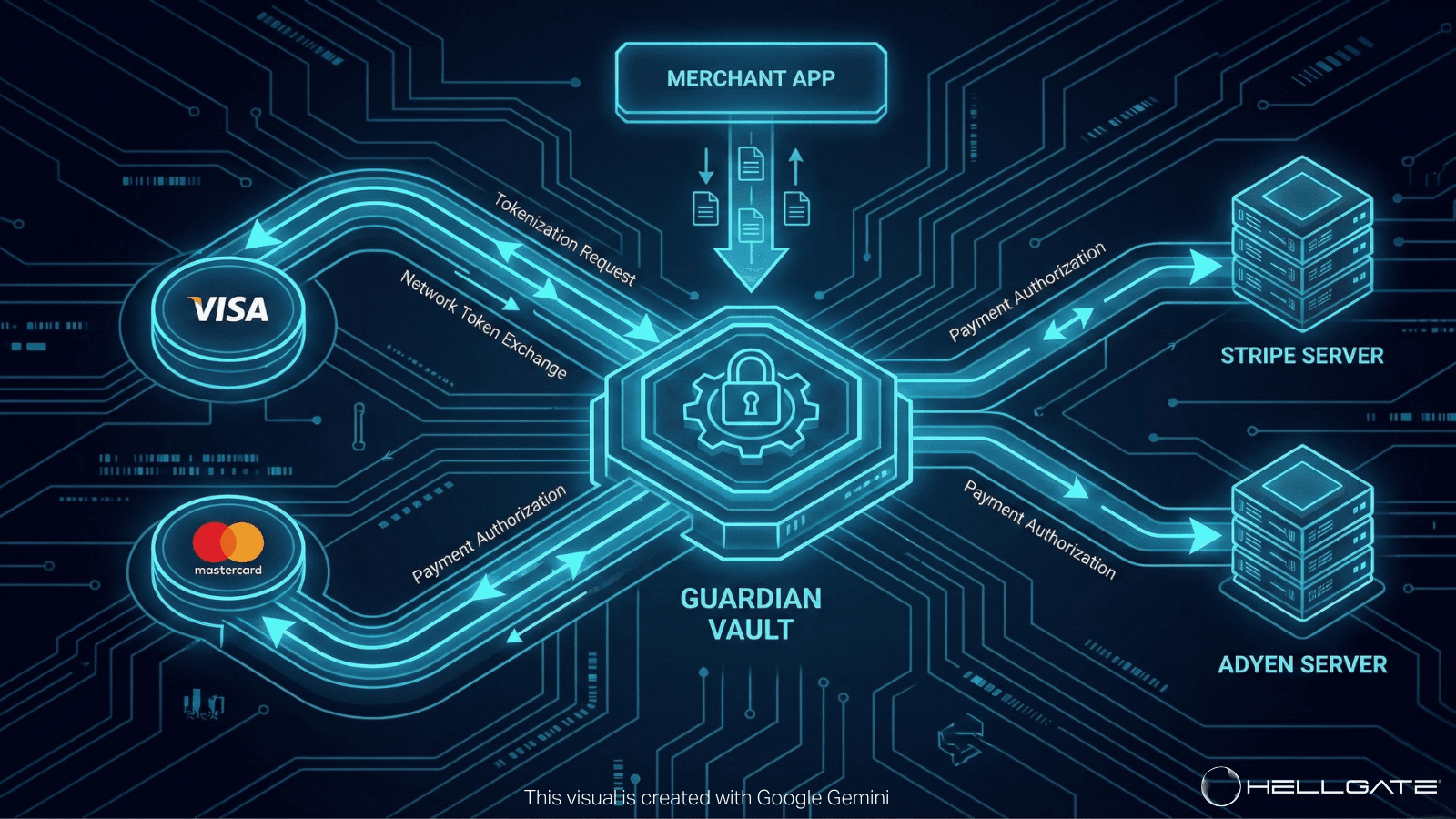
Hellgate Guardian allows merchants to enjoy the benefits of Level 1 security without the operational burden of becoming Level 1 certified themselves.
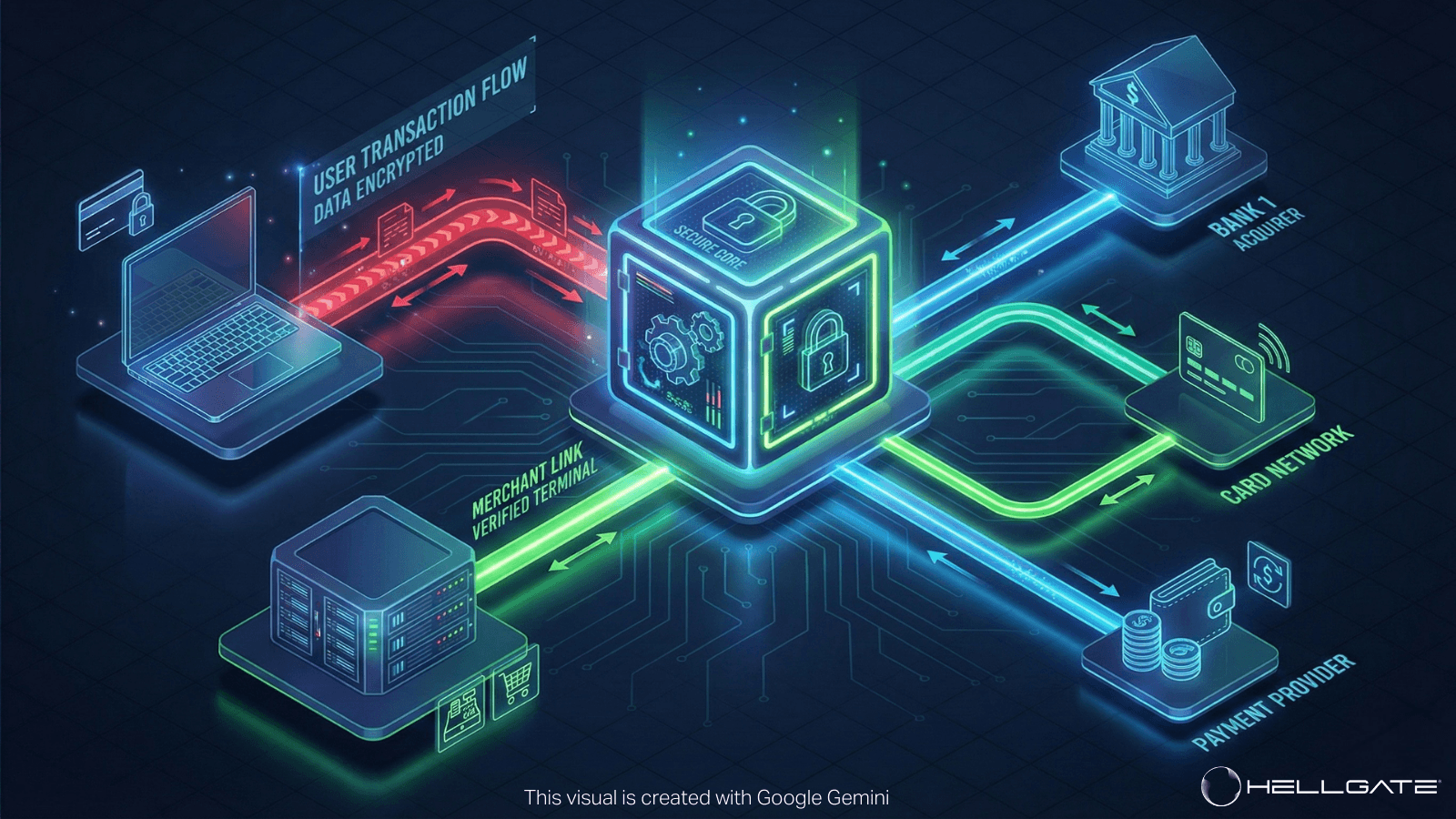
Scope Reduction (The Descope Strategy): Guardian acts as your PCI proxy. By using Guardian's hosted fields or mobile SDKs, raw card data goes directly from the customer's browser to Hellgate's Level 1 Vault. It never touches your servers.
Inherited Compliance: Because Guardian handles the sensitive data, your systems only see "Tokens" (random strings of characters). Tokens are not subject to PCI regulations. This often downgrades a merchant's compliance requirement from a massive Onsite Audit (SAQ-D) to a simple checkbox form (SAQ-A).
Vendor Agnostic Vault: Guardian is a standalone PCI Level 1 Vault. It tokenizes data independently of the acquirer, allowing you to route that secure data to any provider via Hellgate Link, maintaining security while ensuring portability.
Frequently Asked Questions (FAQ)
Q: If I use a payment gateway, am I automatically PCI compliant?
A: No. You are still responsible for ensuring your own environment is secure. However, using a gateway's hosted fields significantly reduces your compliance burden (scope).
Q: How much does a PCI Level 1 audit cost?
A: Direct costs for a QSA audit typically range from $30,000 to $200,000+, not including the internal engineering cost of remediation and maintenance.
Q: What is a ROC (Report on Compliance)?
A: The ROC is the formal report produced by the QSA after an onsite audit. It details your organization's compliance with every single PCI-DSS requirement.
Q: Can I process 7 million transactions and stay Level 2?
A: No. Once you cross the threshold, the card schemes mandatorily upgrade you to Level 1. You typically have a grace period to arrange your first audit.