T
P
PII (Personally Identifiable Information)
PII (Personally Identifiable Information)
What is PII (Personally Identifiable Information)?
PII (Personally Identifiable Information) is a legal and technical term referring to any representation of data that permits the identity of an individual to whom the information applies to be reasonably inferred by either direct or indirect means. In the fintech and payment landscape, PII encompasses a broad spectrum of data points-from obvious identifiers like full names, email addresses, and social security numbers to quasi-identifiers like IP addresses, device IDs, and geolocation data. Managing the lifecycle of PII is the central challenge of modern data privacy compliance.
Deep Dive: The Taxonomy of Identity Data
To architect a secure payment system, one must understand that PII is not a monolith; it exists in varying degrees of sensitivity and regulatory scrutiny. NIST and GDPR frameworks generally categorize PII into two distinct buckets:
1. Linked PII (Direct Identifiers)
This is data that identifies a specific person without the need for additional context.
Examples: Full Legal Name, Passport Number, Social Security Number (SSN), Driver’s License Number, Email Address.
Risk Level: Critical. If this data is breached, it directly facilitates identity theft.
2. Linkable PII (Indirect Identifiers)
This is data that, on its own, may not identify a person, but when combined with other data sets, can de-anonymize an individual.
Examples: Zip/Postal Code, Race/Ethnicity, Date of Birth, Gender, IP Address, Device Fingerprint (User Agent).
Risk Level: High. In the context of "Big Data," aggregation attacks can easily reconstruct identities using only linkable PII.
3. The Intersection with PCI-DSS
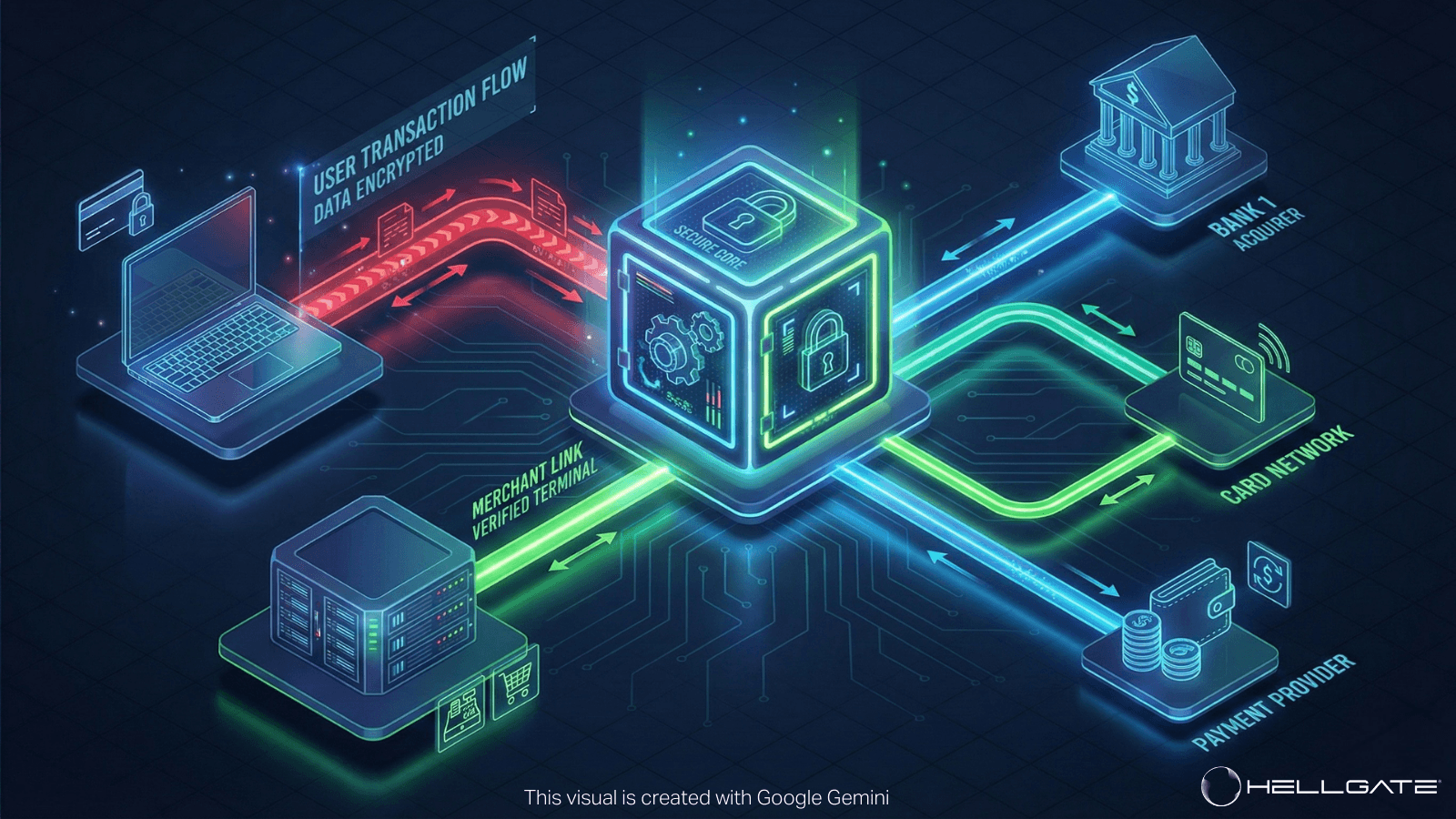
While PCI-DSS specifically protects Cardholder Data (CHD)-like the PAN and CVV-this data is almost always inextricably linked to PII (Name, Billing Address). Therefore, a compliant payment stack must treat the intersection of CHD and PII with the highest level of encryption (AES-256 or better).
4. Regulatory Landscape (The "Right to be Forgotten")
Modern privacy laws (GDPR in Europe, CCPA/CPRA in California) fundamentally change the data architecture requirements.
Data Minimization: Merchants are legally obligated to collect only the PII necessary for the transaction.
Right to Erasure: If a user requests to be "forgotten," the merchant must mechanically purge all PII from their databases. This is technically difficult if PII is hard-coded into immutable transaction logs or invoice histories.
Common Pain Points in PII Management
The mismanagement of PII creates "Toxic Data" within an organization-data that provides no operational value but carries immense liability.
Data Sprawl: In a microservices architecture, PII often propagates unchecked. The user’s email address might be replicated across the Shipping Service, the Marketing Database, the Fraud Engine, and the Analytics Warehouse. Securing one does not secure the others.
Unencrypted Logs: A common vulnerability occurs when developers accidentally log API request payloads for debugging purposes, inadvertently writing clear-text names and addresses into server logs that are accessible to lower-clearance staff.
Compliance Friction: Deleting a user's data upon request (GDPR Subject Access Request) is a manual nightmare if the data is fragmented across ten different providers and internal databases.
The Hellgate Approach
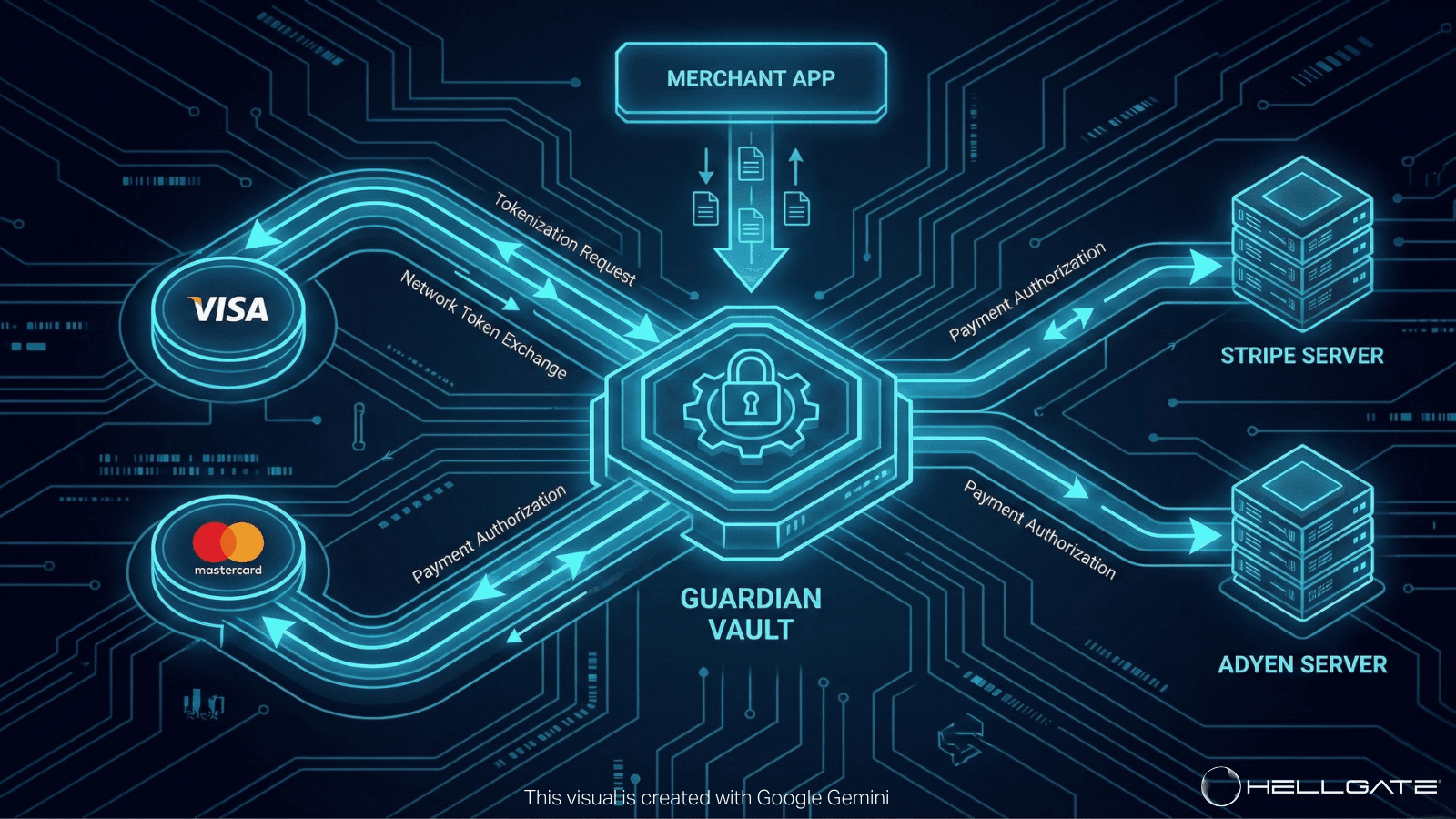
Hellgate Guardian is engineered to act as a PII firewall. We apply the same rigorous tokenization technology used for credit cards to general PII, allowing merchants to operate on "De-identified" data.
Universal Tokenization: Guardian can tokenize fields beyond just the card number. We can tokenize names, emails, and addresses. The merchant stores a token (e.g., tkn_email_8492), while the actual PII is locked in the Guardian Vault.
Pseudonymization: By replacing direct identifiers with tokens in your analytics and marketing databases, you render the data useless to attackers while retaining its utility for business intelligence (e.g., tracking repeat customer behavior via token matching).
Centralized Erasure: When a user invokes their "Right to be Forgotten," you do not need to scrub ten different databases. You simply delete the encryption key for that user's specific tokens in Guardian. Instantly, the tokenized data scattered across your ecosystem becomes commercially unreadable "garbage data," achieving cryptographic erasure.
Cross-Provider Privacy: When using Link or Hub to route transactions to a third-party PSP, Guardian selectively detokenizes only the specific PII required by that bank (e.g., billing address for AVS checks), ensuring minimal data exposure.
Frequently Asked Questions (FAQ)
Q: Is an IP address considered PII? A: Yes. Under GDPR and most modern privacy frameworks, an IP address is considered PII because it can be used (especially by ISPs) to pinpoint a specific household or individual.
Q: What is the difference between Encryption and Tokenization for PII? A: Encryption uses a mathematical algorithm to scramble data; it is reversible with a key. Tokenization replaces the data with a random, non-mathematical placeholder. Tokenization is generally considered more secure for PII because the token contains no original data to decrypt.
Q: How long should I store PII? A: Only as long as necessary for the business purpose (e.g., fulfilling the order or meeting tax audit requirements). Indefinite storage is a violation of the "Storage Limitation" principle in GDPR.
Q: Does Hellgate sell my customer's PII? A: Absolutely not. Hellgate acts as a Data Processor. The merchant remains the Data Controller and owner of the data. Our business model is software infrastructure, not data monetization.